
Czech Silesia
Historical Czech land in northeastern Czech Republic.

via Wikipedia: Czech Silesia · see source
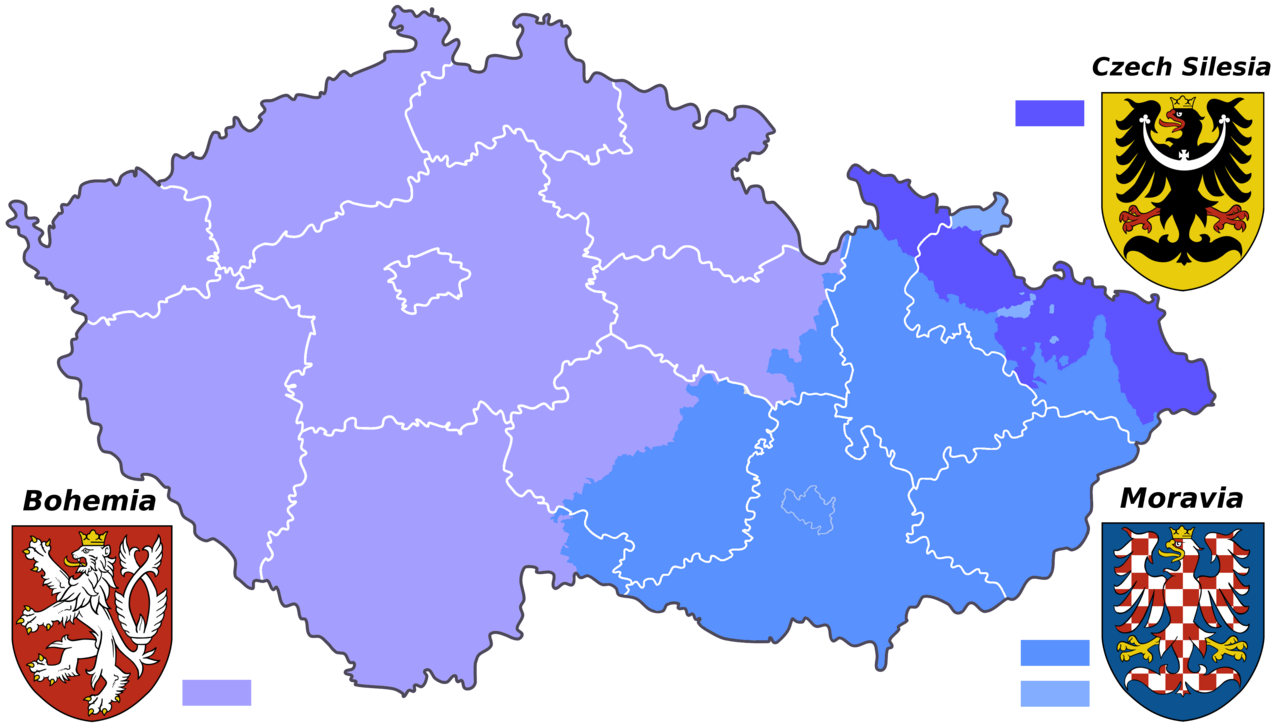
Czech Silesia is a part of the historical region of Silesia now in the Czech Republic. Together with Bohemia and Moravia, it is one of the three historical Czech lands. It lies in the north-east of the Czech Republic, predominantly in the Moravian-Silesian Region, with a section in the northern Olomouc Region, and is smaller than Austrian Silesia (also known as the Duchy of Upper and Lower Silesia) before 1918, as Austrian Silesia included areas now in Poland (e.g., Cieszyn Silesia east of the Olza) and excluded the Hlučín Region. With the city of Ostrava roughly in its geographic centre, the area comprises much of the modern region of Moravian-Silesia and, in its far west, a small part of the Olomouc Region in the area of Jeseník District.
- area
- 5,140 km² (as of 1900)
- population
- 670,000 (as of 1900)
- major_cities
- Ostrava, Opava, Český Těšín
- major_rivers
- Oder, Opava, Olza
- historical_status
- One of the three historical Czech lands
Verified Timeline
Lore & Background
In the Middle Ages, Silesia formed part of Piast-ruled Poland, and in the 14th century it gradually passed to the Kingdom of Bohemia. Modern-day Czech Silesia derives primarily from a small part of Silesia that remained within the Bohemian Crown and the Habsburg monarchy at the end of the First Silesian War in 1742, when the rest of Silesia was ceded to Prussia. It was re-organised as the Duchy of Upper and Lower Silesia, with its capital at Opava. In 1900, the Duchy occupied an area of 5,140 km² and had a population of 670,000. In 1918, the entire former Duchy became part of the newly created state of Czechoslovakia; the split of Cieszyn Silesia between Czechoslovakia and Poland occurred later in 1920, with Czechoslovakia gaining its western portion. Hlučín Region, formerly part of Prussian Silesia, also became part of Czechoslovakia under the Treaty of Versailles in 1920. Following the Munich Agreement of 1938, most of Czech Silesia was annexed into the Reichsgau Sudetenland and Poland annexed the Trans-Olza area on the east bank of the Olza. In 1939–1940, during the anti-Polish Intelligenzaktion campaign, many Polish activists, priests, officials, teachers and school principals were deported by the German occupiers to concentration camps and then murdered there. After World War II, Czech Silesia and Hlučín Region were returned to Czechoslovakia and the ethnic Germans were expelled in accordance with the Potsdam Agreement. The border with Poland was once again set along the Olza (although not confirmed by treaty until 1958).
Reader's Guide
Czech Silesia is significant as one of the three historical Czech lands, alongside Bohemia and Moravia, and as a region that experienced complex territorial shifts due to wars and treaties. Its borders were shaped by the First Silesian War (1742), the Treaty of Versailles (1920), the Munich Agreement (1938), and post-World War II settlements. The region's history includes periods under Piast Poland, the Kingdom of Bohemia, the Habsburg monarchy, Prussia, Czechoslovakia, and Nazi German occupation. Its demographic legacy includes German-speaking populations until 1945, followed by expulsion, and the presence of Lach and Cieszyn Silesian dialects. Notable figures from the region range from medieval chronicler Martin of Opava to modern tennis player Petra Kvitová, reflecting its cultural and intellectual contributions. About two thirds of the territory is situated in the Eastern Sudetes, with the rest extending into the Ostrava Basin, Moravian Gate, Moravian-Silesian Foothills and the western section of the Western Beskids. Its major rivers are the Oder, Opava and Olza, which forms part of the natural border with Poland.
Did You Know?
- In 1900, the Duchy of Upper and Lower Silesia occupied an area of 5,140 km² and had a population of 670,000.
- The Olza river forms part of the natural border between Czech Silesia and Poland.
- Between 1938 and 1945, part of the area was annexed into the Reichsgau Sudetenland, not known as 'Sudeten Silesia'.
- The Hlučín Region, formerly part of Prussian Silesia, became part of Czechoslovakia under the Treaty of Versailles in 1920.
- Notable figures from Czech Silesia include biologist Gregor Mendel and tennis player Petra Kvitová.
A Landscape Divided Among Three Nations
Silesia sprawls across roughly 40,000 square kilometres of Central Europe, home to an estimated eight million people. The region is bisected into Lower Silesia in the west and Upper Silesia in the east, with the Oder River threading through its heart and the Sudeten Mountains forming a natural southern boundary. Today the territory is divided among three nations: the bulk lies in Poland, while smaller portions fall within the Czech Republic and Germany. The largest urban centre is Wrocław, serving as Lower Silesia's capital, while Opole holds the title of historic capital for Upper Silesia. The Katowice metropolitan area represents the region's biggest urban cluster. On the Czech side, parts of Ostrava sit within Silesia's historical borders, and the German city of Görlitz also touches the region. This tripartite division means that a single historical landscape now carries three national identities, each with its own administrative and cultural frameworks.
A Century-by-Century Churn of Sovereigns
No other European region has changed hands as frequently as Silesia. Beginning with Great Moravia in the late ninth century and Bohemia shortly after, the territory was absorbed into the early Polish state under Mieszko I of the Piast dynasty around the year 1000. Poland's subsequent fragmentation in the twelfth century shattered Silesia into a patchwork of duchies, each governed by different branches of the Piast line. By the fourteenth century the region fell under the Bohemian Crown within the Holy Roman Empire, and in 1526 that crown passed to the Austrian Habsburgs, though several duchies continued under Polish dukes as formal Bohemian fiefdoms. The Silesian Wars of the eighteenth century saw Prussia seize the territory from Austria in 1742, and by 1871 it was folded into the German Empire. After World War I, the easternmost slice of Upper Silesia was granted to Poland following insurrections and a plebiscite, while former Austrian portions were split between Czechoslovakia and Poland. World War II brought total Nazi control, and the 1945 Potsdam Agreement ultimately transferred most of the region to Polish jurisdiction.
Language, Faith, and a Layered Cultural Heritage
Silesia's cultural fabric is a layered tapestry of Polish, Czech, and German influences, a direct consequence of centuries of shifting borders. The most visible linguistic feature is the Silesian language, still spoken by a minority in Upper Silesia, though scholars and locals continue to debate whether it constitutes a distinct language or merely a dialect of Polish. In Lower Silesia, the German-speaking population expelled between 1945 and 1948 left behind a dialect now on the verge of extinction, while a new mixed Polish dialect and fresh costume traditions have since developed. The region's material culture includes richly decorated folk costumes, hearty local cuisine, and an architectural spectrum spanning Gothic churches, Baroque palaces, and industrial-era factories. Numerous historical landmarks and UNESCO World Heritage Sites dot the landscape, and the Jelenia Góra valley alone is studded with castles and strongholds built during the era of competing noble houses.
Names, Celts, and the Pre-Christian Past
Long before any medieval duchy or modern state claimed the land, Silesia's very name carried spiritual weight. The region's designation in virtually every European language—Polish Śląsk, German Schlesien, Czech Slezsko, Latin Silesia—traces back to the Ślęza river and Mount Ślęża in mid-southern Silesia, a site where pre-Christian pagans performed their cults. Scholars classify Ślęża among the Pre-Indo-European topographic names of the area, and some Polish linguists link it to Old Polish words meaning dampness or moisture, rejecting an alternative theory that ties the name to the Silings tribe. The earliest recorded inhabitants include Celtic groups who entered through the Kłodzko Valley in the fourth century BC, settling near what are now Wrocław, Oława, and Strzelin. Germanic Lugii tribes appeared in the first century BC, and West Slavic and Lechitic peoples arrived around the seventh century, eventually building boundary structures such as the Silesian Przesieka and the Silesia Walls to mark their territorial edges.
Gallery

More in Other European Regions 1-23
Spotted an error? Know more?
This is a living reference — every entry is fact-audited, and reader corrections feed straight into our audit queue. Suggest an edit · See this site's audit record